
For the past calendar year, NCSF has been tracking an increase in negative media about swinging and polyamory. It’s important for organizers and venues to know what’s being discussed in the media so you can be prepared to protect yourself and your attendees.
Clickbait articles are nothing new, however negative articles are increasingly appearing on prominent mainstream news sites. For example, here is some recent negative coverage about swingers:
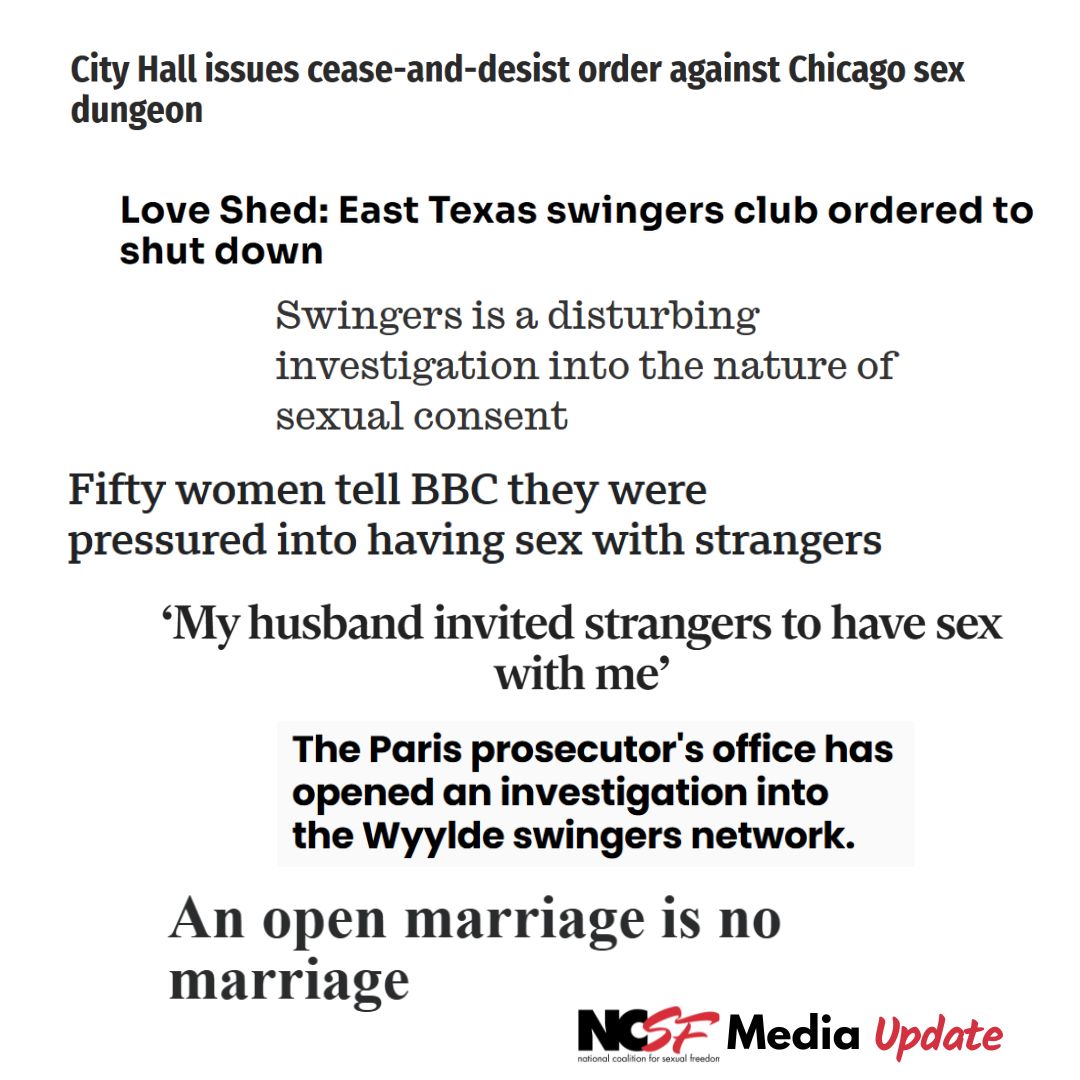
- Fifty women tell BBC they were pressured into having sex with strangers
- Swingers is a disturbing investigation into the nature of sexual consent
- ‘My husband invited strangers to have sex with me’
- The Paris prosecutor’s office has opened an investigation into the Wyylde swingers network.
There is also continued negative coverage of the closure of our community spaces:
- Love Shed: East Texas swingers club ordered to shut down
- City Hall issues cease-and-desist order against Chicago sex dungeon
- Goodlettsville business cited for alleged sexual encounters
Along with these attacks on swinging and clubs, there’s been a sharp change in the way polyamory is being discussed in the media. Where once it was considered “trendy” or desirable to engage in consensual non-monogamy, now the tone is often negative:
- An open marriage is no marriage
- Why is the media promoting polyamory?
- I thought opening up my relationship after 10 years would fix it… that was a huge mistake
- It’s Time to Push Back Against the Glamorization of Polyamory
The coverage of “throuples” which used to be positive or titillating, is now also being reported as harmful:
- Wisconsin Teen Mom in a ‘Throuple’ Claims ‘No One Loves Her.’ In The Past, She Allegedly Grabbed Mountain Dew Can and Went for Her Partner’s B***s
- ‘They said to me, you were the best sex toy we ever had’: the pain, pleasure and paranoia of life in a throuple
When we compare this to 2023, the coverage about non-monogamy in our Media Updates was only 10% negative (6 out of 61 articles). In the past calendar year, that’s tripled to 32% of the articles containing a negative slant on non-monogamy. That’s not counting 10 of the 13 articles in this report, because other than the articles about the closures of community spaces, we didn’t post the other 10 as Media Updates due to their extreme negativity and our desire to not help broadcast harmful stereotypes. If we had, that would be a 53% negative-slant rate, with only half the number of articles published compared to 2023.
We are comparing this recent trend to 2023 because our Media Updates show that since mid-2024, negative coverage has been rising while at the same time, fewer articles are being published about non-monogamy. In 2023, we posted 61 articles about non-monogamy compared to only 22 in the past calendar year. That’s a 64% drop in less than three years. We believe this is due to shadow-banning of words like polyamory, swinging, kink, that we have tracked in our own social media platforms, which means media outlets are less likely to post articles that contain these words because they aren’t getting the same views.
What You Can Do About It
It is important to educate your attendees and set the tone for any mainstream interest you may draw. The best defense we have in the non-monogamy communities against closure of our evens and venues is our ability to educate people about consent and positive relationship dynamics.
Consider taking these proactive measures:
1. Implement Strong Consent Policies: Clearly define and enforce consent policies. Ensure all users understand and agree to these policies before participating. Include what consent does and does not look like. Prominently post your consent policy on your website so it’s easy to find. You can contact NCSF to assist with creating a Consent Policy that is tailored for your group, event or website.
2. Enhanced Moderation and Reporting: Develop robust moderation systems to monitor interactions and swiftly address any reported abuse or misconduct. Provide clear channels for users to report issues. NCSF can help you create Consent Procedures so that you deal with each report fairly.
3. Education and Awareness: Educate users about the importance of consent and the potential for coercion. Offer resources and support for those who feel pressured or unsafe. NCSF provides FAQs such as Red Flags and IPV Tactics Matrix for Non-monogamy that you can share.
4. Workshops and Webinars: Host regular workshops and webinars on topics such as consent, healthy relationships, and coping strategies for trauma. These can be led by experts in psychology and relationship counseling. Contact NCSF to provide a workshop on consent for non-monogamy called How to Ask for What You Want.
5. Resource Center: Develop a comprehensive resource center with articles, guides, and links to external support organizations that focus on trauma recovery, consent education, and healthy relationship dynamics. You can link to NCSF’s Consent Counts page of resources, along with our Materials download page to get our brochures for free.
6. Privacy and Security Measures: Protect users’ privacy by preventing unauthorized sharing of personal information and images. This includes data encryption, secure user authentication, user control of their own information in privacy settings, and image and content moderation.
If your group or business is contacted by a journalist or the local authorities, please reach out to NCSF at ncsfreedom@ncsfreedom.org so we can help you craft a response strategy and provide support. Together, we can create a community where respect, safety, and consent are paramount.